


Greece Travel Guide: best places to visit, historic sites & essential travel tips
Greece is the kind of destination that stays with you long after you leave. From the ancient temples of Athens and the whitewashed villages of Santorini to the turquoise waters of Crete and the dramatic monasteries of Meteora, Greece combines thousands of years of history with spectacular landscapes, delicious cuisine, charming villages, and unforgettable island experiences.
Our Greece travel guide will help you decide where to go, what to see, and how to make the most of your time. This guide will help you discover:
The best places to visit in Greece
Greece's most important historic sites
The best Greek islands for different types of travelers
Must-do experiences beyond sightseeing
Greece travel tips for first-time visitors
When to visit Greece
How many days you need
Transportation tips
Food and cultural experiences you shouldn't miss
Why visit Greece? Here is our travel guide.
Greece offers an extraordinary combination of history, culture, beaches, food, nature, and island life.
You can spend the morning walking through an ancient archaeological site, enjoy a leisurely Greek lunch overlooking the sea, explore a traditional village in the afternoon, and watch the sunset from a cliffside taverna in the evening. And that's precisely what makes Greece such a rewarding destination.
Greece is a destination to experience.
1. Athens — Where Ancient Greece meets modern life
No Greece travel guide would be complete without Athens. The Greek capital is one of the world's great historic cities and the gateway to many Greek adventures.
Places you shouldn't miss visiting:
The Acropolis & Parthenon - The Acropolis is the centerpiece of Athens and one of the world's most recognizable archaeological landmarks.
Acropolis Museum - Plan time to explore the museum after visiting the archaeological site.
Plaka - Wander through the picturesque streets beneath the Acropolis, where you'll find restaurants, shops, and traditional architecture.
Monastiraki - Perfect for shopping, street food, people-watching, and exploring the famous flea market.
Mount Lycabettus - For one of the best panoramic views of Athens, head to Mount Lycabettus around sunset.
Travel tip: Don't try to see Athens in a few rushed hours. Two to three nights gives first-time visitors enough time to experience the city's major highlights without feeling overwhelmed.

2. Santorini — iconic views & romantic sunsets
Santorini is famous for a reason. The island's volcanic caldera, whitewashed villages, blue-domed churches, dramatic cliffs, and spectacular sunsets make it one of Greece's most recognizable destinations.
Best things to do in Santorini:
Explore Oia
Walk between Fira (Capital of Santorini, also spelled Phira or Thira) and Oia
Visit the caldera viewpoints
Take a sunset cruise
Visit a winery
Explore Akrotiri archaeological site
Relax at a volcanic beach
Enjoy a long lunch overlooking the Aegean Sea
Is Santorini worth visiting?
Absolutely, but don't assume the island is only about photographs. For a more authentic experience, venture beyond Oia and Fira. Explore smaller villages, visit local wineries, hike sections of the island, or take a boat excursion around the caldera.
Travel tip: If possible, stay at least two nights. Santorini deserves more than a quick day trip.

3. Mykonos — beaches, villages & island energy
Mykonos combines beautiful beaches, charming Cycladic architecture, waterfront restaurants, and a lively atmosphere.
Don't miss:
Mykonos Town
Little Venice
The famous windmills
Paraportiani Church
Delos archaeological site
Beach clubs and Night clubs
Traditional tavernas
Mykonos is particularly appealing to travelers who enjoy beaches, nightlife, shopping, dining, and stylish resorts.
Travel tip: For history lovers, consider a day trip to nearby Delos, one of the most important archaeological sites in the Cyclades.

4. Crete — for food, beaches & adventure
If you have more time, don't overlook Crete. The largest Greek island offers a remarkable variety of experiences, including beaches, mountains, archaeological sites, villages, hiking trails, and some of the best food in Greece.
Places to explore:
Chania - One of the most charming cities on Crete, known for its Venetian harbor and atmospheric old town.
Heraklion - The island's capital and a convenient base for exploring important archaeological attractions.
Knossos - One of Greece's most fascinating archaeological sites and an essential stop for anyone interested in Minoan history.
Balos Lagoon - Known for its spectacular turquoise water and dramatic scenery.
Samaria Gorge -A fantastic option for active travelers who enjoy hiking.
Travel tip: Crete is large. Don't try to explore the entire island from one hotel. For a more relaxed vacation, choose one or two regions and explore them properly.

5. Rhodes — medieval history meets the Mediterranean
Rhodes is one of the best Greek islands for travelers who want a mixture of history and beach time.
The medieval Old Town is a UNESCO World Heritage Site and one of the most impressive historic areas in Greece.
Places you should not miss visiting:
Medieval Old Town
Palace of the Grand Master
Street of the Knights
Lindos
Acropolis of Lindos
Beautiful Mediterranean beaches
Rhodes is particularly attractive for travelers who don't want to choose between a cultural vacation and a beach vacation.

6. Meteora — one of Greece's most spectacular landscapes
Imagine enormous sandstone pillars rising dramatically from the landscape, with centuries-old monasteries seemingly suspended above them, that's Meteora. The monasteries of Meteora are among Greece's most extraordinary cultural and natural attractions.
Why visit Meteora?
Spectacular scenery
Historic monasteries
Photography
Hiking
Cultural & Religious experiences
Sunrise and sunset viewpoints
Travel tip: Meteora can be visited as part of a mainland Greece itinerary, and it's an excellent choice for travelers looking for something different from the traditional Greek island experience.

7. Delphi — the sacred center of the ancient Greek world
Nestled on the slopes of Mount Parnassus, Delphi is one of Greece's most fascinating archaeological destinations. To the ancient Greeks, Delphi was considered the center of the world. Pilgrims traveled from across the Greek world to consult the famous Oracle of Delphi, who was believed to communicate messages from the god Apollo.
Today, Delphi combines spectacular mountain scenery with remarkably preserved ancient ruins.
Don't miss:
Temple of Apollo – The heart of the ancient sanctuary.
Ancient Theater – Enjoy spectacular views across the valley from this historic theater.
Treasury of the Athenians – One of the best-preserved structures in the sanctuary.
Archaeological Museum of Delphi – Home to important artifacts discovered at the site.
Tholos of Delphi – One of the most recognizable monuments in the sanctuary.
Travel tip: Delphi can be visited as a day trip from Athens, but staying overnight allows you to experience the area at a much more relaxed pace.
Best for: History lovers, archaeology enthusiasts, photographers and travelers who want to experience mainland Greece beyond Athens.

8. Knossos — discover the world of the Minoans
Travel back more than 3,500 years at Knossos, the legendary archaeological site near Heraklion on the island of Crete. Knossos was the center of the Minoan civilization, one of Europe's earliest advanced civilizations. Its sprawling palace complex, colorful frescoes and fascinating mythology have helped make it one of the most intriguing historic sites in Greece.
The site is also closely associated with the ancient Greek legend of King Minos and the Minotaur's Labyrinth.
Don't miss:
Palace of Knossos
Grand Staircase
Throne Room
Minoan frescoes
Central Court
Archaeological Museum of Heraklion
Travel tip: Combine Knossos with a visit to Heraklion, particularly the Archaeological Museum, where many important Minoan artifacts can be seen.
If you're visiting Crete on a cruise, check your port schedule carefully. Heraklion is an excellent gateway to Knossos, but you'll want to allow enough time for transportation and your return to the ship.
Best for: History lovers, archaeology enthusiasts, families and travelers fascinated by Greek mythology.

9. Mycenae — walk in the footsteps of ancient kings
Located in the northeastern Peloponnese, Mycenae is one of Greece's most important archaeological sites and a fascinating destination for anyone interested in the origins of ancient Greek civilization.
The ancient city was the center of the powerful Mycenaean civilization, which flourished during the Bronze Age. Walking through the massive Lion Gate and exploring the remains of the fortified citadel gives visitors a sense of just how powerful this ancient kingdom once was.
Historic sites you shouldn't miss:
Lion Gate – The monumental entrance to the ancient citadel.
Cyclopean Walls – Massive stone fortifications surrounding the city.
Treasury of Atreus – An extraordinary ancient beehive-shaped tomb.
Royal Grave Circle – An important archaeological discovery containing royal burials.
Archaeological Museum of Mycenae – Explore artifacts uncovered at the site.
Travel tip: Mycenae pairs particularly well with Epidaurus and Nafplio on a Peloponnese itinerary.
If you have time, consider spending a night or two in Nafplio, one of Greece's most charming historic towns.
Best for: Ancient history enthusiasts, archaeology lovers, road-trip travelers and anyone fascinated by the legendary world associated with Homer's epics.
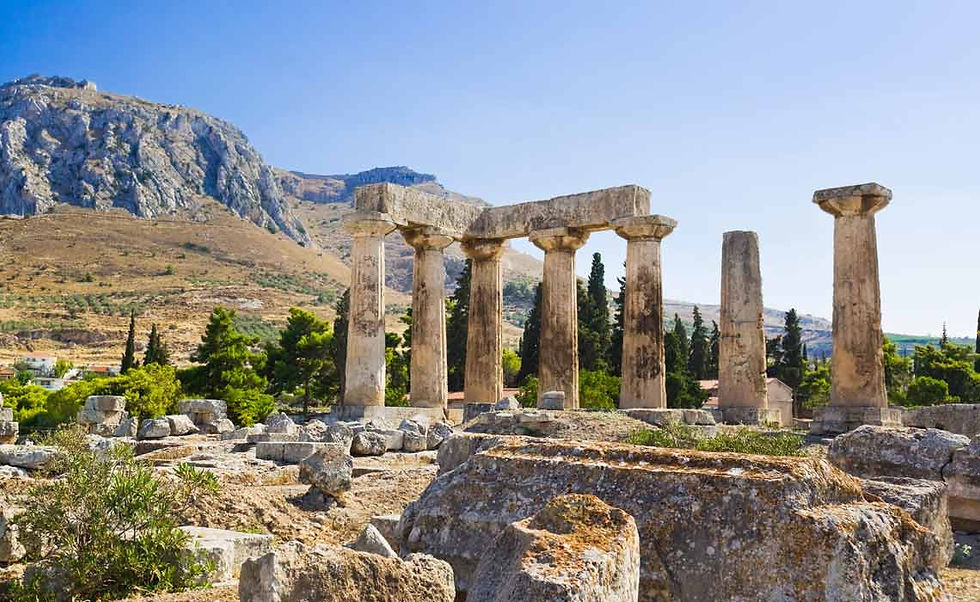
10. Ancient Corinth — where history meets the road to the Peloponnese
Just a short journey from Athens, Ancient Corinth is an excellent addition to a mainland Greece itinerary.
Because of its strategic location between mainland Greece and the Peloponnese, Corinth became one of the most important cities of the ancient Greek world. The site also has special significance for Christian history. St. Paul visited Corinth and established one of the earliest Christian communities there.
Don't miss:
Temple of Apollo
Ancient Agora
Bema of St. Paul
Roman Forum
Archaeological Museum of Ancient Corinth
Acrocorinth – The impressive fortified citadel overlooking the region.
Travel tip: Ancient Corinth is relatively easy to visit from Athens and can be combined with Nafplio, Mycenae or the Corinth Canal.
For travelers interested in biblical history, the connection with St. Paul adds another fascinating dimension to the experience.
Best for: History lovers, biblical-history travelers, archaeology enthusiasts and travelers looking for an easy cultural excursion from Athens.

How many days do you need to visit Greece?
5–7 days - this allow enough time to focus on Athens + one island.
10 days - Athens + Santorini + one additional destination.
14 days - you can comfortably combine Athens + several islands (short cruise to Cyclades) or mainland destinations.
2–3 weeks - consider a more immersive itinerary combining Athens, islands, mainland Greece, and cultural experiences.
Planning a historic Greece itinerary?
If ancient history is one of your main reasons for visiting Greece, you don't have to limit yourself to Athens.
A fascinating mainland itinerary could include: Athens → Corinth → Mycenae → Epidaurus → Nafplio → Delphi
Or you can combine ancient Greece with an island vacation: Athens → Delphi → Santorini → Crete → Mykonos
For cruise travelers, Knossos, Corinth and Delphi can also inspire shore excursions and pre- or post-cruise extensions.
Cyclades Island-Hopping cruise - a great way to see more of Greece in less time
If you're dreaming of visiting several Greek islands but don't want to spend your vacation coordinating ferries, hotels, transfers and luggage, a short Cyclades island-hopping cruise can be one of the easiest and most enjoyable ways to explore Greece, and we know the right cruise line to go on!
Instead of unpacking every few days, your cruise ship becomes your floating hotel while you wake up in a different Greek destination.

Why choose a Cyclades cruise?
A short cruise through the Cyclades can allow you to experience several iconic destinations in one vacation, including:
Mykonos – charming whitewashed streets, Little Venice, beaches and lively nightlife
Santorini – dramatic caldera views, volcanic landscapes and unforgettable sunsets
Paros – picturesque villages, beautiful beaches and a more relaxed island atmosphere
Milos – spectacular coastline, unique rock formations and secluded beaches
Naxos – traditional villages, local cuisine and some of the best beaches in the Cyclades
Depending on the itinerary, some cruises may also include other Greek islands or nearby destinations such as Crete, Rhodes or Turkey.

What is a Cyclades Island-Hopping cruise?
The Cyclades are a group of islands in the Aegean Sea known for their distinctive whitewashed architecture, blue-domed churches, beautiful beaches and traditional villages.
A traditional island-hopping vacation usually requires booking:Ferry → Hotel → Transfer → Ferry → Hotel → Transfer …and repeating the process several times. And this can be very time consuming.
A cruise simplifies the logistics: Unpack once → Explore multiple islands → Return to your ship each evening.
For travelers who want to see a lot without spending valuable vacation time managing transportation, taking a cruise can be a major advantage.
What Might a Short Cyclades Cruise Look Like?
Cruise itineraries vary, but a typical 7-night Greek Islands itinerary might look something like:
Day 1: Athens / Piraeus
Day 2: Mykonos
Day 3: Kusadasi (Turkey) or another nearby destination
Day 4: Rhodes or another Greek island
Day 5: Crete
Day 6: Santorini
Day 7: Another Cycladic island or at sea
Day 8: Athens / Piraeus
Shorter itineraries may focus more heavily on the Cyclades, while longer voyages can combine the Cyclades with other Greek islands and ports in the Eastern Mediterranean.
Tip: Always look carefully at the amount of time the ship spends in each port. An itinerary visiting six destinations isn't necessarily better than one visiting four if you have more time to explore each island.

Ready to put Greece on your travel wishlist?
Planning a trip to Greece can quickly become complicated when you start combining international flights, hotels, ferries, island transfers, cruises, excursions and sightseeing.
That's where a travel professional can help. At Wishlist Getaways, we create personalized vacations, cruises, private tours and group travel experiences designed around your interests, travel style and wishlist.
Whether you're dreaming of Athens and the Acropolis, a romantic Santorini escape, island hopping through the Cyclades, a culinary adventure in Crete, or a Greek cruise, we can help turn the idea into a thoughtfully planned journey.
Ready to start planning? Contact Wishlist Getaways and let's turn your Greece dream into an unforgettable journey.
Best time to visit Greece: month by month
January: Low prices and crowds.
❌ Cool, rainy, and many islands are quiet.
February: Cheap and peaceful.
❌ Cold weather and limited island activities.
March: Mild weather and spring scenery.
❌ Sea is too cold for swimming.
April: ⭐Great for sightseeing, fewer crowds.
❌ Weather can be unpredictable.
May: ⭐ Warm weather, fewer crowds, and good prices.
❌ Sea can still be cool.
June: ⭐ Excellent beaches, warm sea, and sunny weather.
❌ Prices and crowds increase.
July: Perfect summer weather and lively islands.
❌ Very hot, crowded, and expensive.
August: ⭐ Best for beaches and nightlife.
❌ Peak crowds, high prices, and intense heat.
September: ⭐ Warm weather, fewer crowds, and warm seas.
❌ Early September can still be busy.
October: Pleasant weather and fewer tourists.
❌ More rain and some seasonal closures.
November: Great for culture, food, and cities.
❌ Cool weather and quiet islands.
December: Low prices and festive atmosphere.
❌ Cold, rainy, and limited beach activities.
Best overall months for visiting Greece are: April, May, June, September, and early October.


Comments